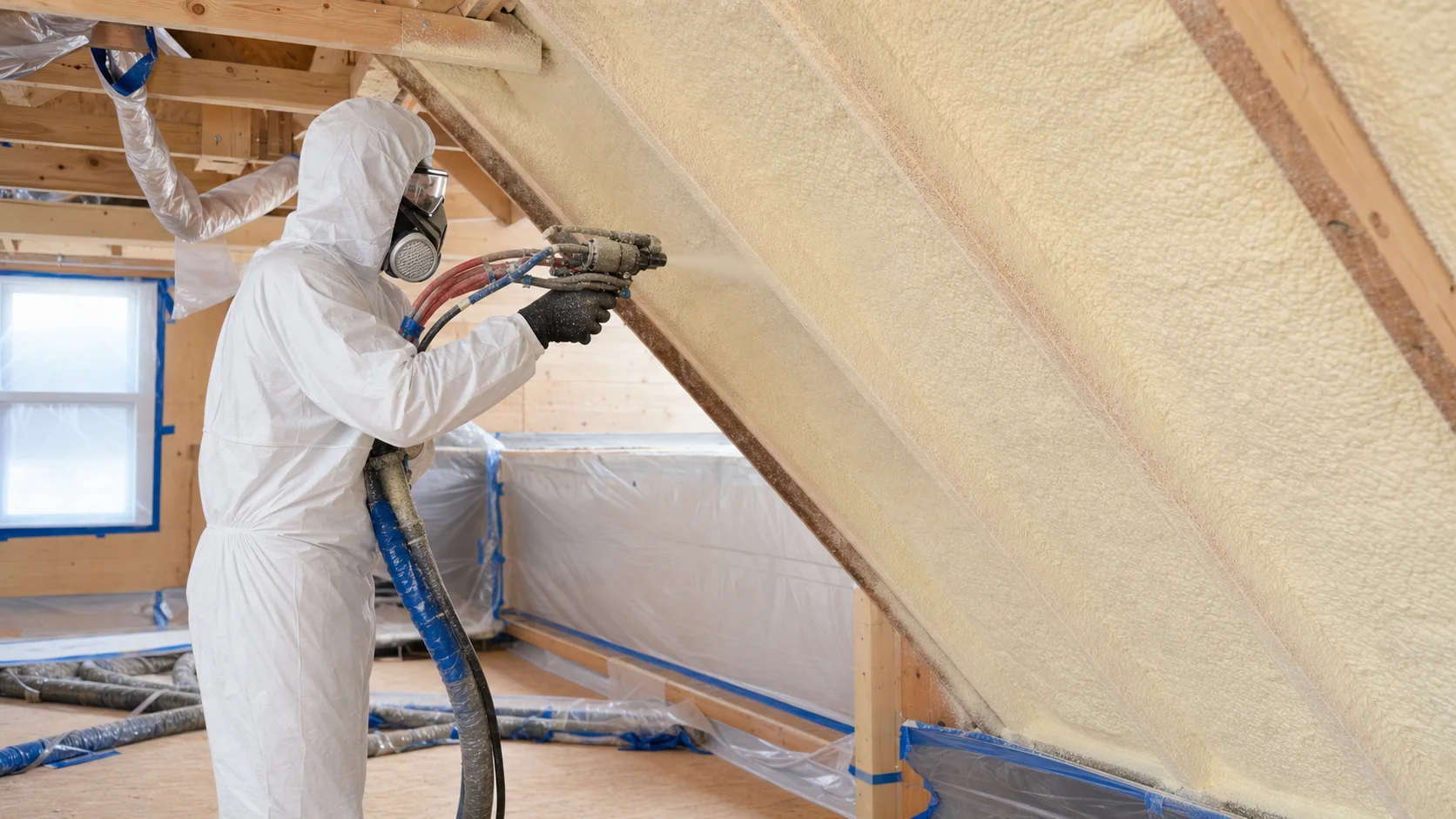



PUR foam insulation of ceilings above garages, basements and unused lofts. The guide discusses different heat flow directions, acoustics, access from below and protection of utility rooms. The following guidelines guide the decision, but do not replace the design, substrate assessment or documentation of a specific product.
First, determine the function of the building element and its operating conditions, then select the system, thickness and method of construction control. Technical values, warranty scope and formal requirements should be checked in the current documents relevant to a given investment.

The isolation site determines the direction of losses and the requirements of the layers
The ceiling above the unheated garage, the ceiling under the unused attic and the stud wall are not the same detail. They differ in the direction of heat flow, layer arrangement, fire and acoustic requirements and the method of insulation protection.
In lightweight structures, it is necessary to take into account the share of wood or profiles in heat transfer and to plan for the tightness of connections. In the garage and basement, there are requirements regarding fire separation, resistance of cladding and installations – these are determined by the building design.
What to check before making a decision
Subject PUR foam ceiling insulation the safest way is to compare solutions based on the same building element, the same assumptions and a clearly described scope. The list below helps you identify missing information before ordering work.
- Determine which room is heated and on which side the heat limit runs.
- Check fire requirements, acoustic requirements and the way foam is protected.
- Include beams, profiles, lifts and installation transitions.
- Plan continuity with insulation of adjacent walls, roof or foundation.
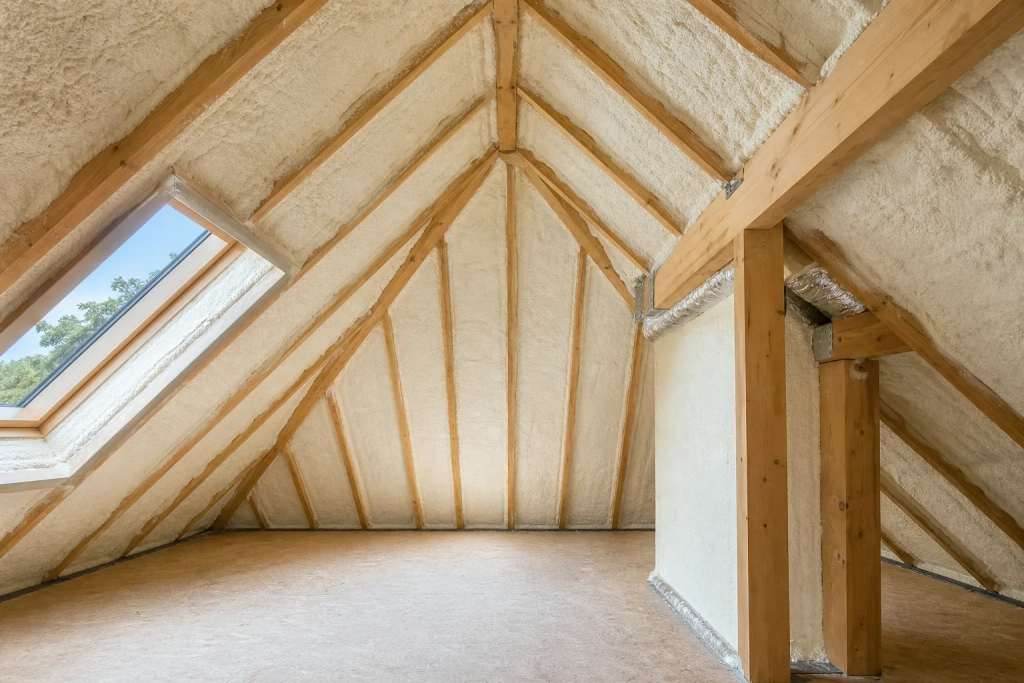
Most common errors and simplifications
- Isolation of an accidental plane without defining the boundary of the heated part of the building.
- Overlooking thermal bridges through structural elements.
- No agreement on protective linings and fire requirements.
If the offer or advice does not describe the limitations of the solution, it is worth asking for clarification. A reliable recommendation should indicate not only the advantages, but also the conditions of use, elements excluded from the scope and the method of acceptance.
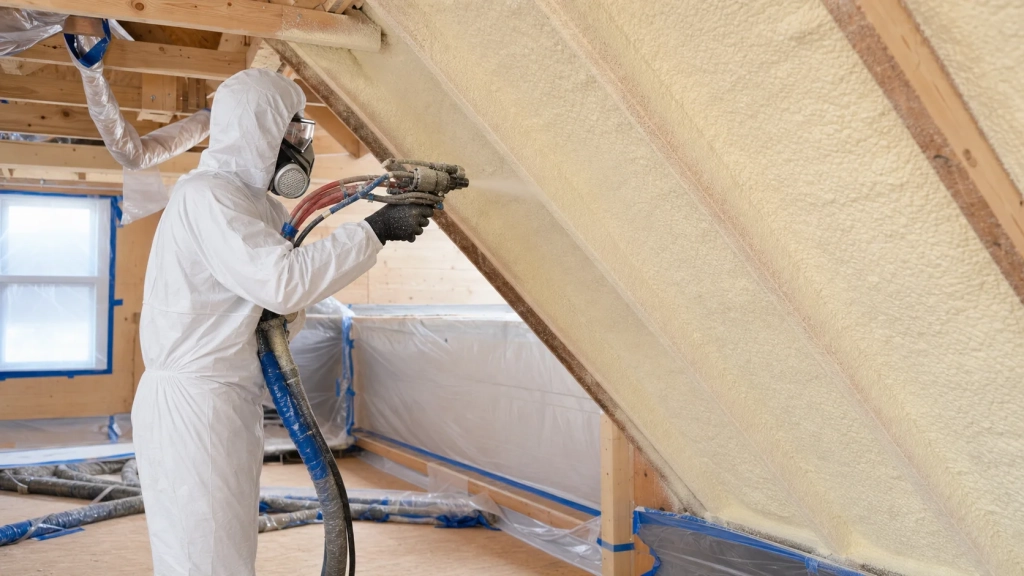
Summary
Good decision on PUR foam ceiling insulation combines the design, current material documentation and real conditions on the construction site. Before signing the contract, determine the product, scope of preparation, acceptance criteria and documents that you will receive after completion of the work.
FAQ
01
Is the ceiling always isolated from the same side?
No. Access and construction technology are important, but the layout should be selected according to the location of the heated zone, structure and other layers.
02
Does foam remove bridges through beams or profiles?
Does not remove conduction through the construction material. It can seal joints, but the influence of beams and profiles must be taken into account in the calculations.
03
Does foam have to be shielded?
The method of protection depends on the application, fire requirements, design and documentation of the system.
Sources and timeliness
Knowledge status: 14/09/2026. The content is educational in nature. Confirm the final arrangement of layers and execution conditions in the design and current documentation of the specific foam system.