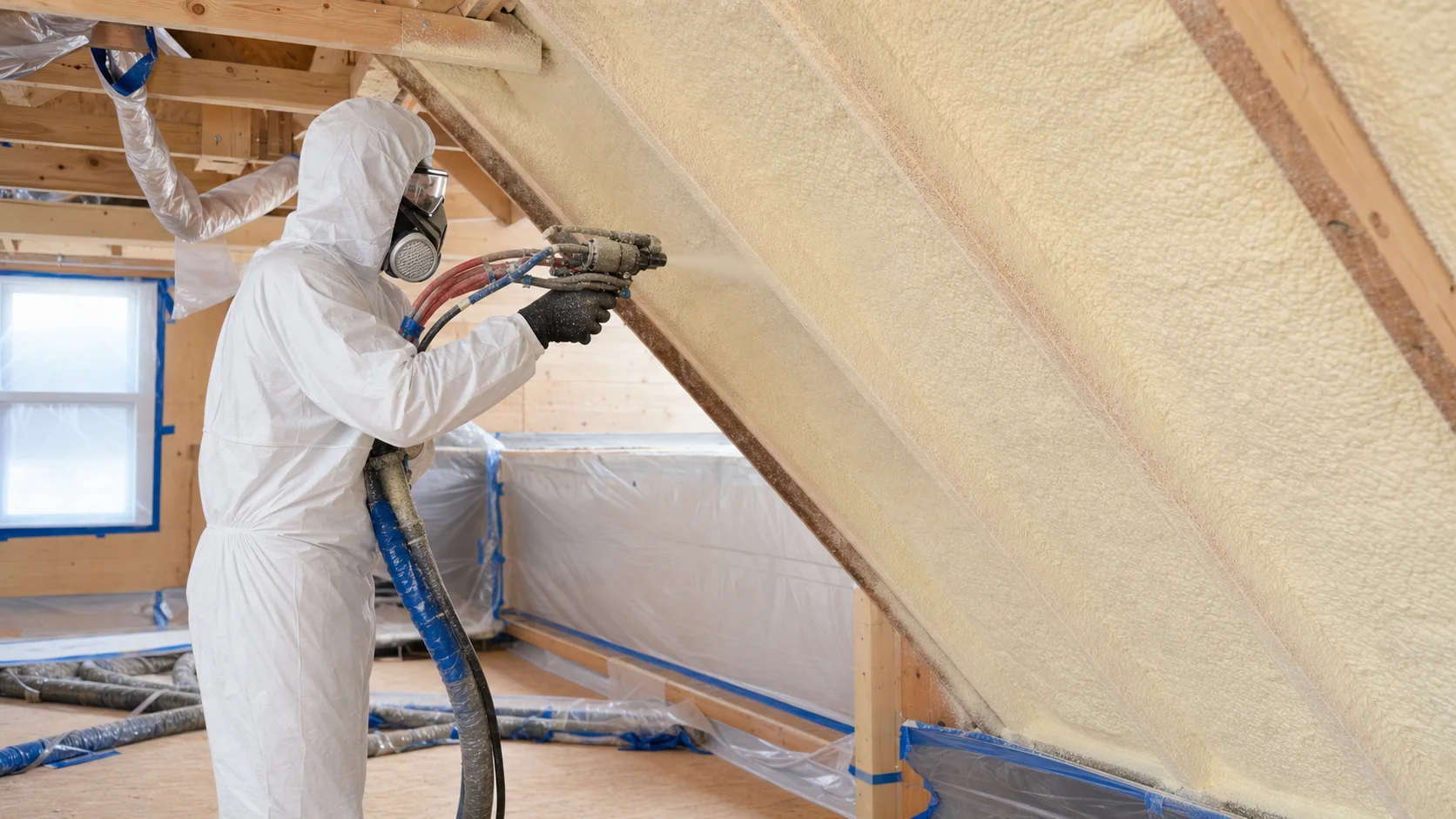


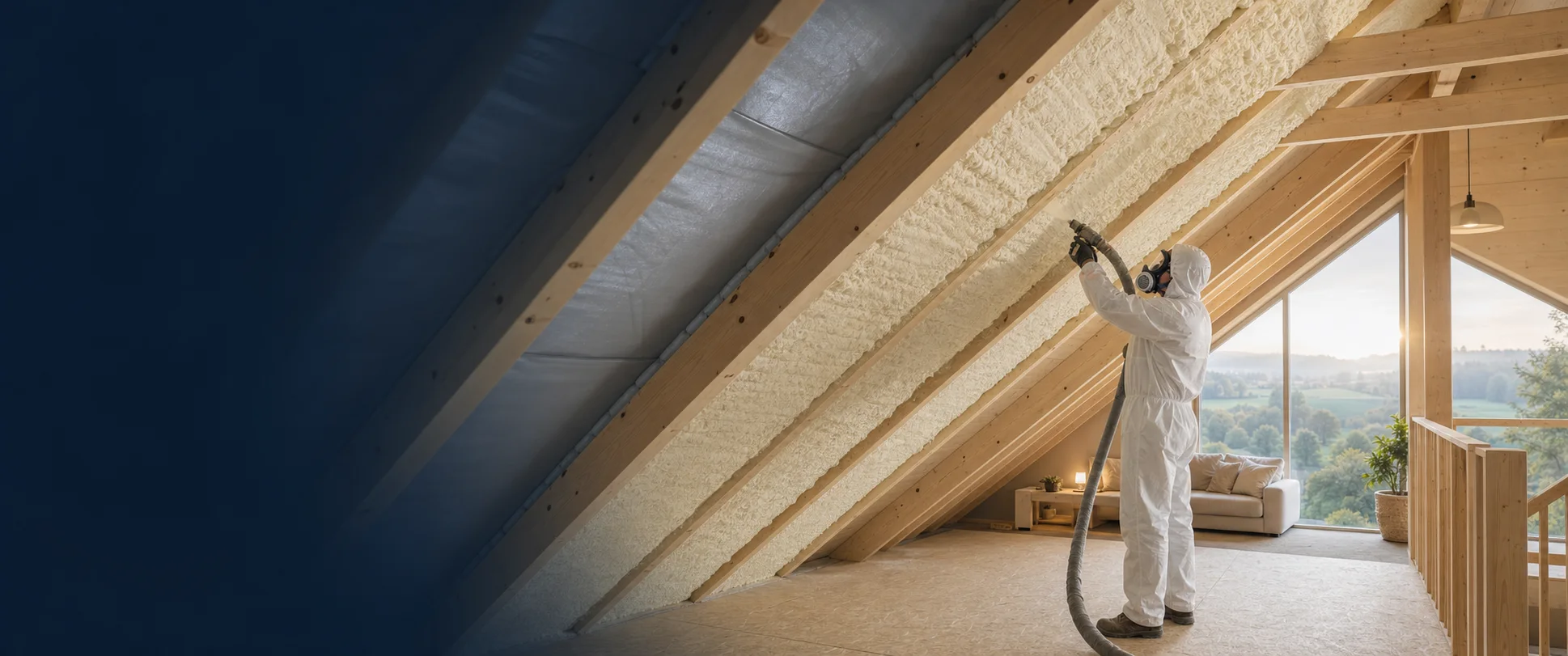
How to choose the thickness of PUR foam in 2026 – lambda, U and installation practice. The guide discusses the relationship between lambda, thickness, thermal bridges and design requirements. The following guidelines guide the decision, but do not replace the design, substrate assessment or documentation of a specific product.
First, determine the function of the building element and its operating conditions, then select the system, thickness and method of construction control. Technical values, warranty scope and formal requirements should be checked in the current documents relevant to a given investment.

Parameters have to be counted for the entire bulkhead
The lambda thermal conductivity coefficient describes the material, while the U coefficient applies to the entire building element. The calculations include the thickness and parameters of all layers, heat transfer resistance and the influence of repeating bridges, for example structure elements.
Foam thickness should not be selected from a universal online table. The basis are the project requirements, the current declared lambda of a specific system, the geometry of the building element and the method of making the details. Measuring a single spot does not confirm the average thickness or continuity of the entire layer.
What to check before making a decision
Subject PUR foam thickness the safest way is to compare solutions based on the same building element, the same assumptions and a clearly described scope. The list below helps you identify missing information before ordering work.
- Ask for the name of the foam system and the current technical card and the declaration of performance.
- Calculate U for a complete layer layout, not just for foam.
- Include rafters, profiles, wreaths, murals and other repetitive heat bridges.
- Establish a way of checking thickness and documenting hard-to-access places.
Most common errors and simplifications
- Comparison of two foams only on the basis of one lambda value.
- Conversion of U as a simple quotient without taking into account other layers and bridges.
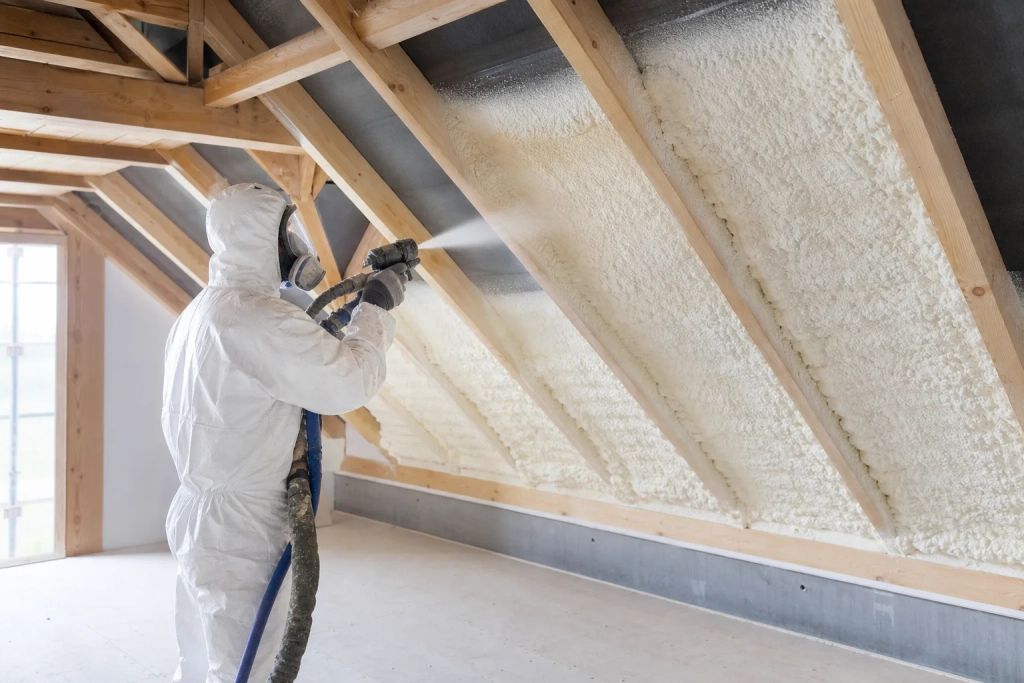
- Acceptance of the nominal thickness of the offer as a guarantee of an even layer.
If the offer or advice does not describe the limitations of the solution, it is worth asking for clarification. A reliable recommendation should indicate not only the advantages, but also the conditions of use, elements excluded from the scope and the method of acceptance.
Summary
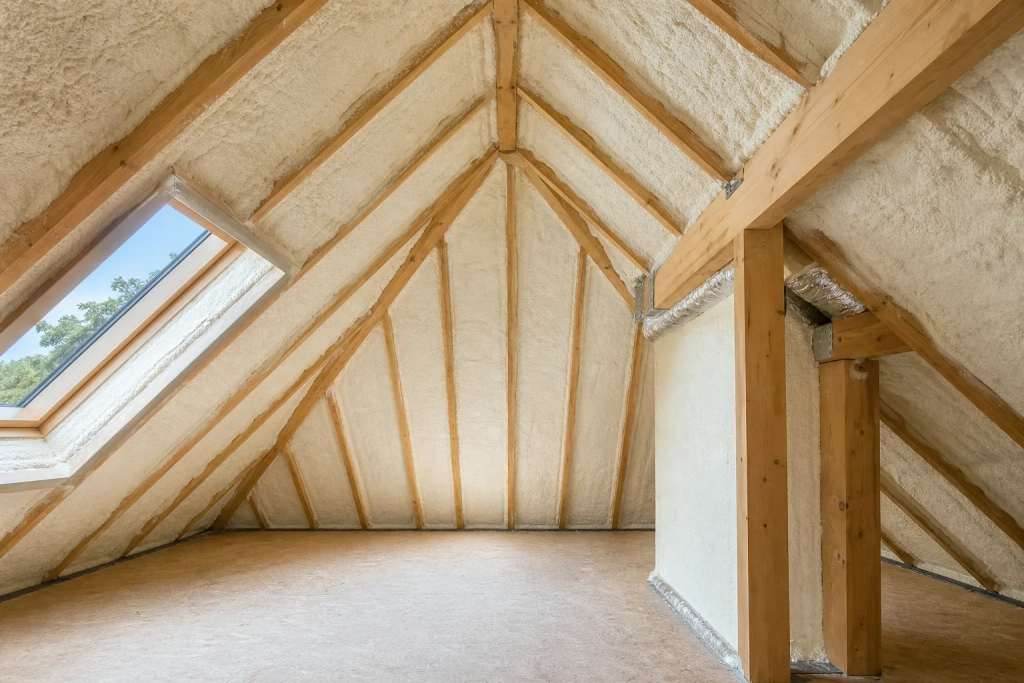
Good decision on PUR foam thickness combines the design, current material documentation and real conditions on the construction site. Before signing the contract, determine the product, scope of preparation, acceptance criteria and documents that you will receive after completion of the work.
FAQ
01
Does lower lambda always mean better insulation?
Not in itself. The result also depends on the thickness, continuity of construction, thermal bridges and parameters of the remaining layers of the building element.
02
Can you calculate the foam thickness only from the required U value?
The thermal resistance relationship can be used for a preliminary estimate, but design U requires calculation of the entire building element and taking into account the structure and boundary conditions.
03
Which lambda value should I take for the calculation?
Declared or calculated value appropriate for a specific application, in accordance with the current product documentation and the method adopted by the designer.
Sources and timeliness
Knowledge status: 14/09/2026. The content is educational in nature. Confirm the final arrangement of layers and execution conditions in the design and current documentation of the specific foam system.