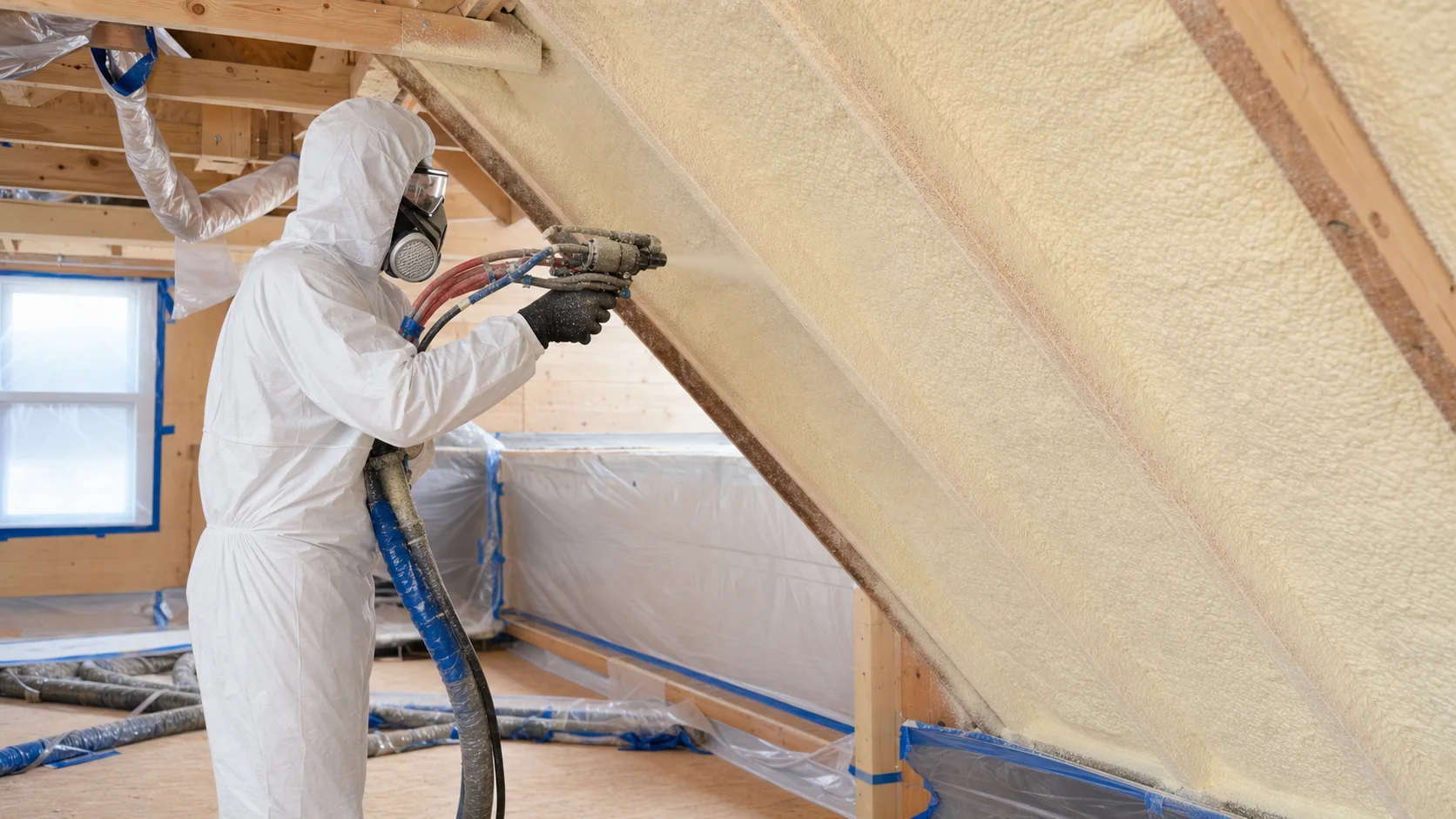


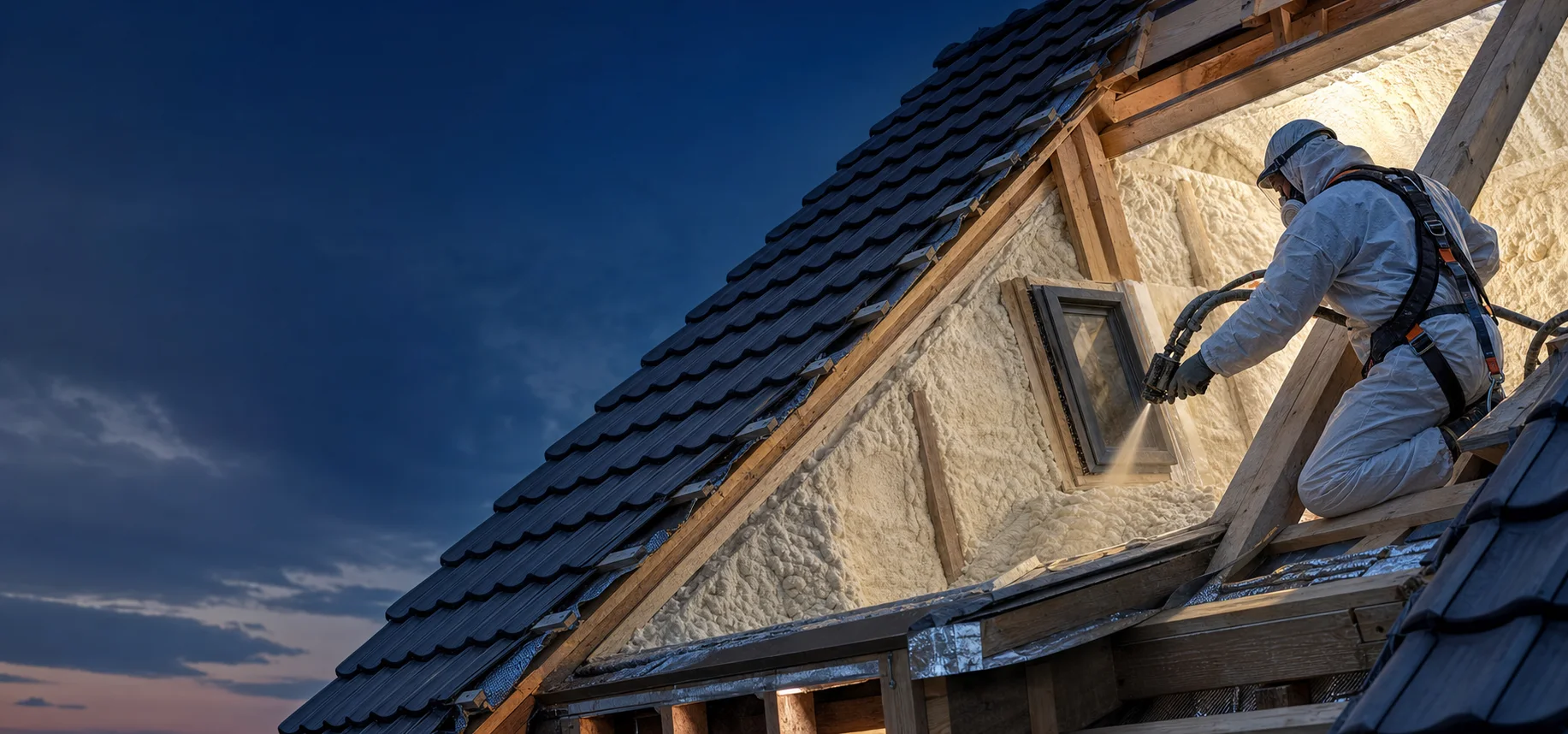
Flat roof insulation with PUR foam — when to choose closed-cell foam. The guide discusses the conditions of flat roofs, humidity, slopes, layers and coordination with waterproofing. The following guidelines guide the decision, but do not replace the design, substrate assessment or documentation of a specific product.
First, determine the function of the building element and its operating conditions, then select the system, thickness and method of construction control. Technical values, warranty scope and formal requirements should be checked in the current documents relevant to a given investment.

Heat insulation does not replace the hydro insulation project
The flat roof and foundation operate in conditions of increased risk of contact with water. The selection of closed-cell foam may be part of the solution, but it does not exempt you from designing slopes, drainage, waterproofing connections, protection against UV radiation and protection against mechanical damage.
Before application, it is necessary to determine the condition and load-bearing capacity of the substrate, permissible humidity, the course of expansion joints and the method of terminating the ends. The suitability of the system is determined by the complete product documentation and the design of a given building element, and not by the term "closed-cell foam" itself.
What to check before making a decision
Subject insulation of the flat roof with PUR foam the safest way is to compare solutions based on the same building element, the same assumptions and a clearly described scope. The list below helps you identify missing information before ordering work.
- Verify droplets, drains, dilations and all passages through the bulkhead.
- Determine the compatibility of foam with the substrate, hydro insulation and protective layers.
- Specify protection against UV, soil, powder and mechanical damage.
- Test for adhesion if required by the system or condition of the ground.

Most common errors and simplifications
- Treatment of thermal insulation layers as an automatic replacement for hydro insulation.
- Spray on damp, dusty or cooled substrate.
- No edge solutions, transitions, wheels and connections to other insulations.
If the offer or advice does not describe the limitations of the solution, it is worth asking for clarification. A reliable recommendation should indicate not only the advantages, but also the conditions of use, elements excluded from the scope and the method of acceptance.

Summary
Good decision on insulation of the flat roof with PUR foam combines the design, current material documentation and real conditions on the construction site. Before signing the contract, determine the product, scope of preparation, acceptance criteria and documents that you will receive after completion of the work.
FAQ
01
Does closed-cell foam replace waterproofing?
This should not be taken automatically. The function of each layer is determined by the system design and documentation, and connections and places exposed to water require a separate solution.
02
Can you spray foam on wet concrete or sheet metal?
The substrate must meet the manufacturer's requirements regarding condition, temperature and humidity. Excessive moisture may impair the adhesion and quality of the foam.
03
Can foam remain exposed outside?
Protection against UV, water and damage must be carried out in accordance with the system. The uncovered layer should not be left without reviewing the product documentation.
Sources and timeliness
Knowledge status: 14/09/2026. The content is educational in nature. Confirm the final arrangement of layers and execution conditions in the design and current documentation of the specific foam system.