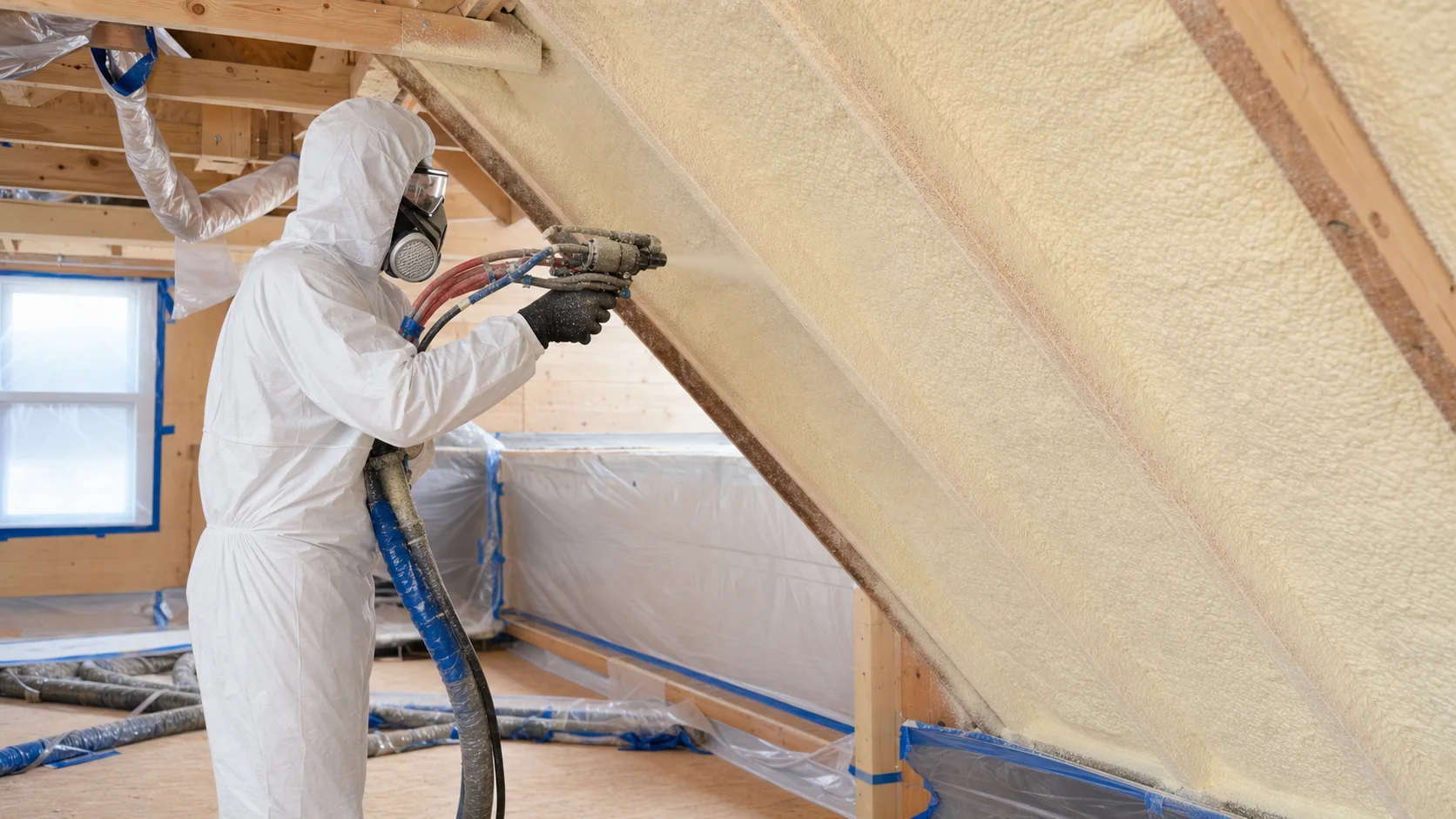



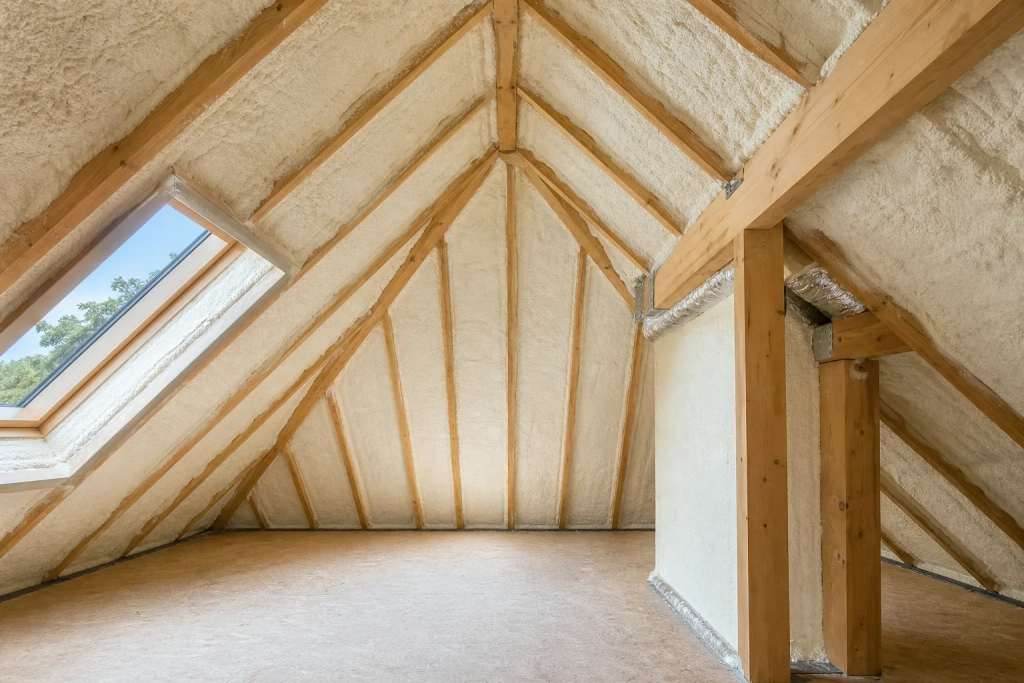
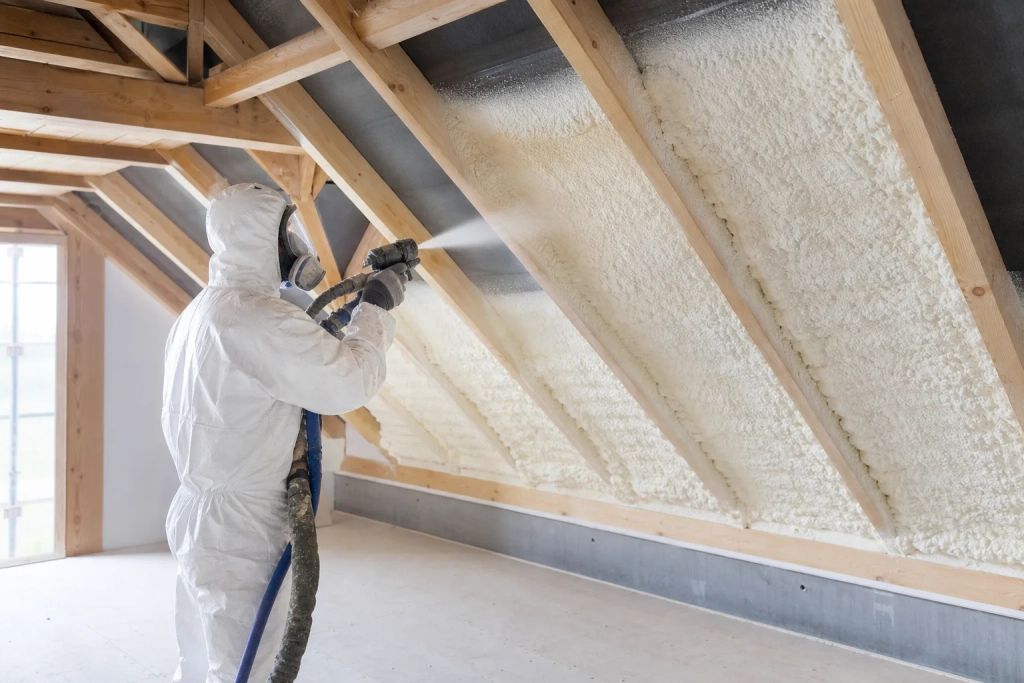
Air tightness of the house and PUR foam – comfort, bills and ventilation. The guide discusses leaks, drafts, the blower door test, ventilation and details of spray insulation. The following guidelines guide the decision, but do not replace the design, substrate assessment or documentation of a specific product.
First, determine the function of the building element and its operating conditions, then select the system, thickness and method of construction control. Technical values, warranty scope and formal requirements should be checked in the current documents relevant to a given investment.

Comfort depends on the whole building
Air tightness limits uncontrolled drafts, but does not replace ventilation. Summer comfort also depends on solar gain, shading, window area, heat capacity, night ventilation and heat sources inside the building.
In acoustics, the complete building element is assessed. A soft material in the cavity can help absorb sound, but insulation also depends on the mass of the cladding, structural separation, tightness of joints and lateral transfer. Do not attribute the result of an entire wall or roof to foam alone.
What to check before making a decision
Subject air tightness of the house foam PUR the safest way is to compare solutions based on the same building element, the same assumptions and a clearly described scope. The list below helps you identify missing information before ordering work.
- Select a target: limiting airflows, overheating or sound transfer.
- Plan a continuous layer and a possible pressure test for tightness.
- For years, analyse windows, shade and the possibility of safe night cooling.
- For acoustics, evaluate the whole system of linings, structures, fillings and connections.
Most common errors and simplifications
- Recognising that a sealed building doesn't need ventilation.
- Promise not to overheat only with one insulating material.
- Administration of the acoustic parameter of the material as a result of a complete partition.
If the offer or advice does not describe the limitations of the solution, it is worth asking for clarification. A reliable recommendation should indicate not only the advantages, but also the conditions of use, elements excluded from the scope and the method of acceptance.
Summary
Good decision on air tightness of the house foam PUR combines the design, current material documentation and real conditions on the construction site. Before signing the contract, determine the product, scope of preparation, acceptance criteria and documents that you will receive after completion of the work.
FAQ
01
Does air tightness mean no ventilation?
No. Tightness limits accidental infiltration, and ventilation is designed to ensure controlled air exchange.
02
Will the isolation itself prevent the heat of the attic?
Not always. In addition to insulation, solar gains through windows, shading, night ventilation, tightness and thermal capacity of partitions are of great importance.
03
Will the foam silence any room?
No. The acoustic effect depends on the entire building element, its mass, tightness, connections and lateral sound transmission paths.
Sources and timeliness
Knowledge status: 14/09/2026. The content is educational in nature. Confirm the final arrangement of layers and execution conditions in the design and current documentation of the specific foam system.