


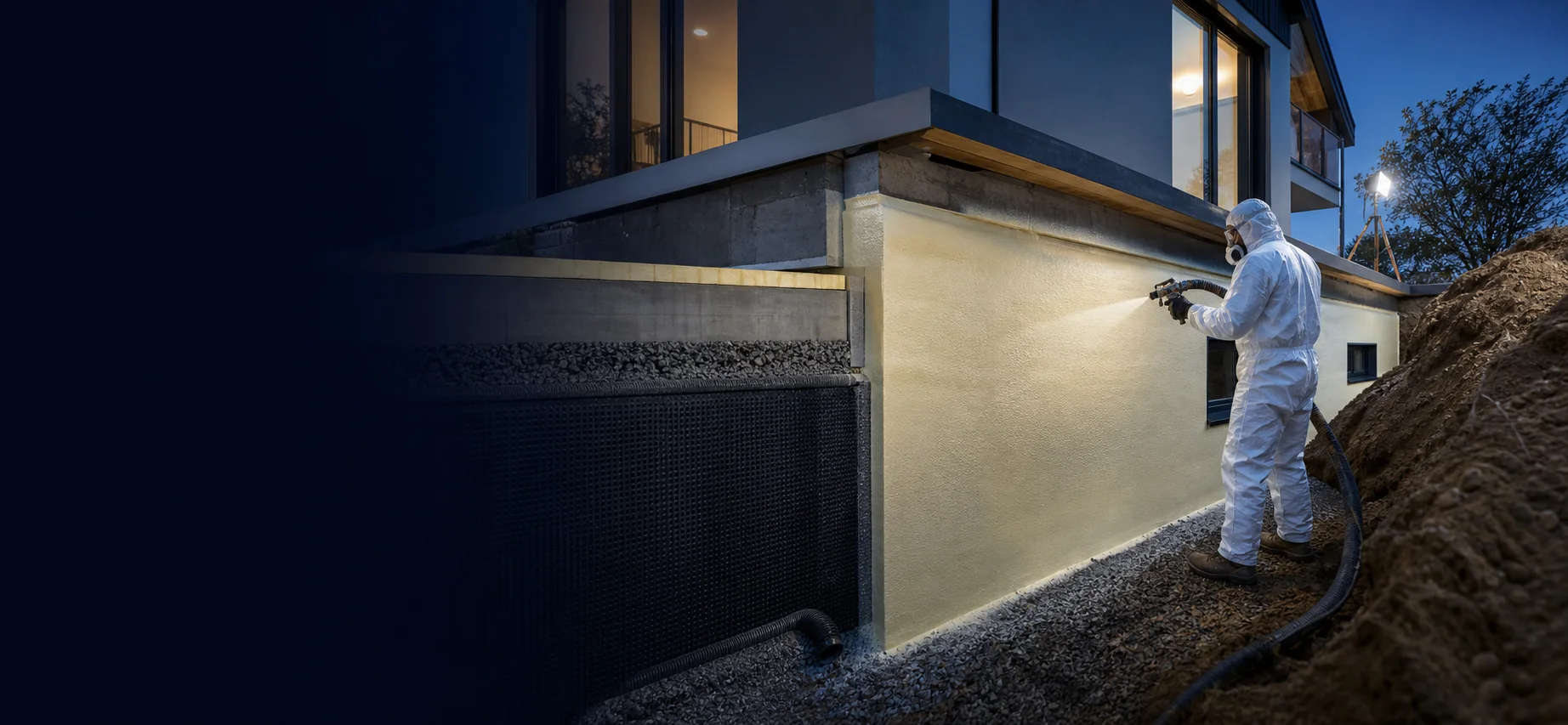
Closed-cell foam
silverFoam CC35 HFO for building elements requiring a rigid layer
silverFoam CC35 HFO creates a compact spray insulation with a high content of closed cells. The product is intended for places where limited water absorption, greater stiffness and resistance to compression are important.
Typical areas include foundations, floors, flat roofs and sheet metal. The effectiveness of the system depends on a dry, load-bearing substrate and the planned protection of the layer against UV, fire and mechanical damage.
PRODUCT DATA
Key values of silverFoam CC35 HFO
01
35 kg/m³
Declared total apparent density.
02
≥ 90%
Cell contents are closed.
03
≥ 150 kPa
Declared compression strength.
04
≤ 0,2 kg/m²
Declared short-term water saturation.
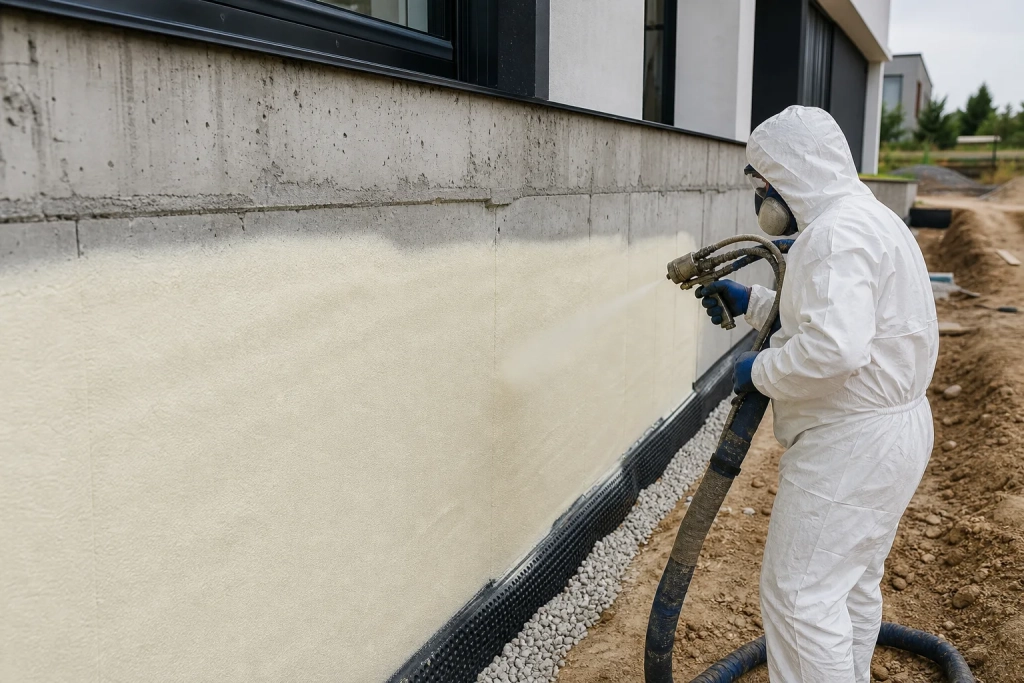
ZONE AT THE GROUND
The foundation requires more than a low lambda
Before spraying, you need to assess the moisture and load-bearing capacity of the substrate, the continuity of the waterproofing, the details of the plinth and the method of subsequent protection of the layer. Foam does not replace drainage design or all layers of waterproofing.
- dry and prepared substrate
- agreed thickness and number of transitions
- continuity at corners and crossings
- mechanical protection against flooding
≥ 90%
closed cells
Compact product structure.
μ ≥ 70
diffusion resistance
Clearly taller than the silverFoam Ag40.
≥ 100 kPa
Tension
Straight to the surface.
E
reaction to fire
Declared euro class of product.
SPECIFICATIONS silverFoam CC35 HFO
Declared Product Properties
The data should be read in conjunction with the current technical data sheet, declaration of performance and specific application requirements.
| Property | Standard | Declared value |
|---|---|---|
| Total apparent density | EN 1602 | 35 kg/m³ |
| Closed cells content | ISO 4590 | ≥ 90% |
| Compression strength | EN 826 | ≥ 150 kPa |
| Short-term water saturation Wp | EN 1609 | ≤ 0,2 kg/m² |
| Water vapour diffusion resistance coefficient μ | EN 12086 | ≥ 70 |
| Tensile strength perpendicular to the surface | EN 1607 | ≥ 100 kPa |
| Reaction to fire | EN 13501-1 | Euroclass E |
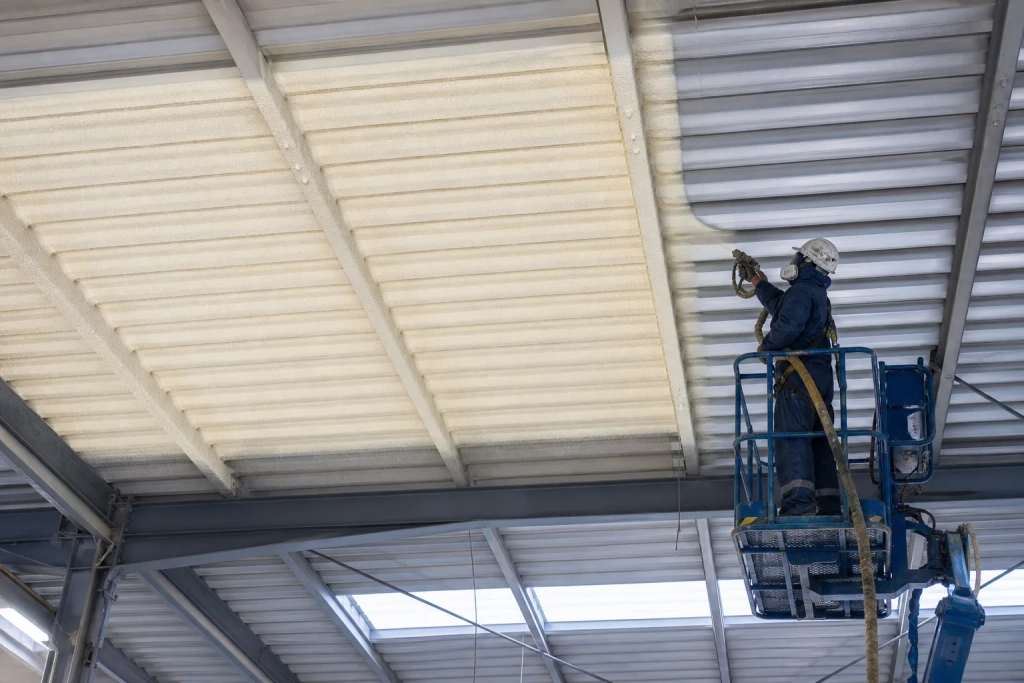
SHEET METAL AND TECHNICAL BUILDINGS
On a large surface, the substrate, condensation and protection are important.
When dealing with sheet metal, you need to check the adhesion of the existing coating, corrosion, expansion joints and condensation conditions. Ready-made foam may require systemic fire and UV protection.
- roofs and walls of halls
- warehouses and agricultural buildings
- containers and dry technical zones
- anti-contaminant isolation after septum analysis
STANDARD OF APPLICATION
Five check points before collection
In a demanding partition, the whole implementation system is important, not just the name of the material.
01
Ground state
Carrying capacity, cleanliness, dryness, adhesion and lack of active corrosion.
02
Spray conditions
Temperature of components, surroundings and surfaces according to documentation.
03
Layer construction
Controlled transitions and maintenance of the required time between them.
04
Details
Corners, passages, dilatations and places exposed to damage.
05
Protection
Planned UV shielding, fire and mechanical damage.
QUESTIONS ABOUT silverFoam CC35 HFO
FAQ: Closed-cell foam silverFoam CC35 HFO
FAQ
01
Is silverFoam CC35 HFO suitable for foundation?
It can be part of a foundation insulation system if the substrate, waterproofing, thickness and mechanical protection comply with the design and product documentation.
02
Does closed-cell foam provide waterproofing?
It should not be treated automatically as a replacement for a complete waterproofing system. The scope of protection against water must result from the design and conditions of a specific building element.
03
Can the silverFoam CC35 HFO be left unguarded outside?
The layer requires protection appropriate for exposure, in particular against UV radiation, fire and mechanical damage.
04
Does greater density mean that the silverFoam CC35 HFO is better for every attic?
No. It is heavier, stiffer and has a higher diffusion resistance than open-cell foam. The selection for the truss must result from the design and operation of the entire building element.
05
What do you want to check before you spray on the sheet?
Condition of the coating, corrosion, dryness, adhesion, temperature, expansion joints, dew point and the required method of protection of the finished insulation.
REQUIRED OVERVIEW
Select silverFoam CC35 HFO for real terms
Send photos, dimensions, background and exposure information. The contractor will determine the scope of preparation, thickness and method of protection of the layer.