



TWO PUR SYSTEMS
The product shall be added to the partition and its working conditions.
silverFoam offers open-cell silverFoam Ag40 foam and closed-cell silverFoam CC35 HFO. Both are applied by spraying, but differ in structure, weight, diffusion resistance and mechanical resistance.
A wooden attic, a foundation and a sheet metal roof do not work in the same way. Therefore, the right choice begins with recognizing the structure, moisture, loads and the arrangement of the remaining layers.
FOUR SELECTION CRITERIA
What do you need to check before you choose?
01
Type of bulkhead
Wood, wall, concrete or sheet metal and detail geometry.
02
Contact with moisture
Dry conditions, increased humidity, soil or water.
03
Loads
Required rigidity, compression and protection against damage.
04
Layer layout
Ventilation, para-insulated, hydro-insulated and shielded layers.
SELECT THE ROAD
Two products for different tasks
See typical applications, then go to the full sheet with parameters and implementation requirements.
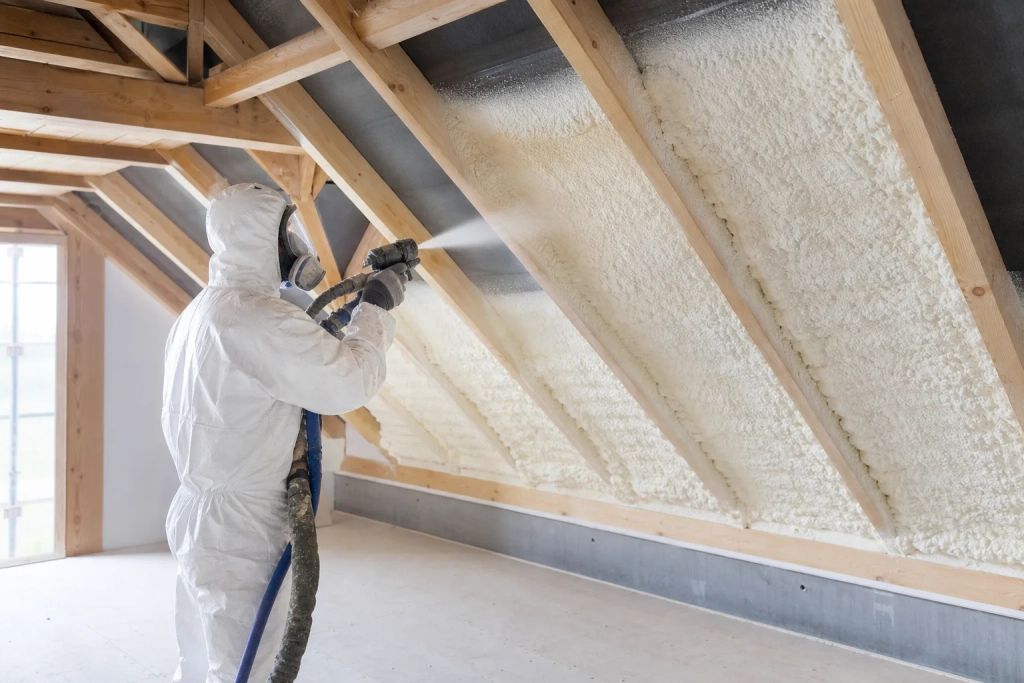
LIGHT AND HAPPY
silverFoam Ag40
Open-cell foam for dry, light partitions where low weight and fit to details are important.
- lofts and roof mows
- Timber floors and ceilings
- timber-frame walls
- internal partitions
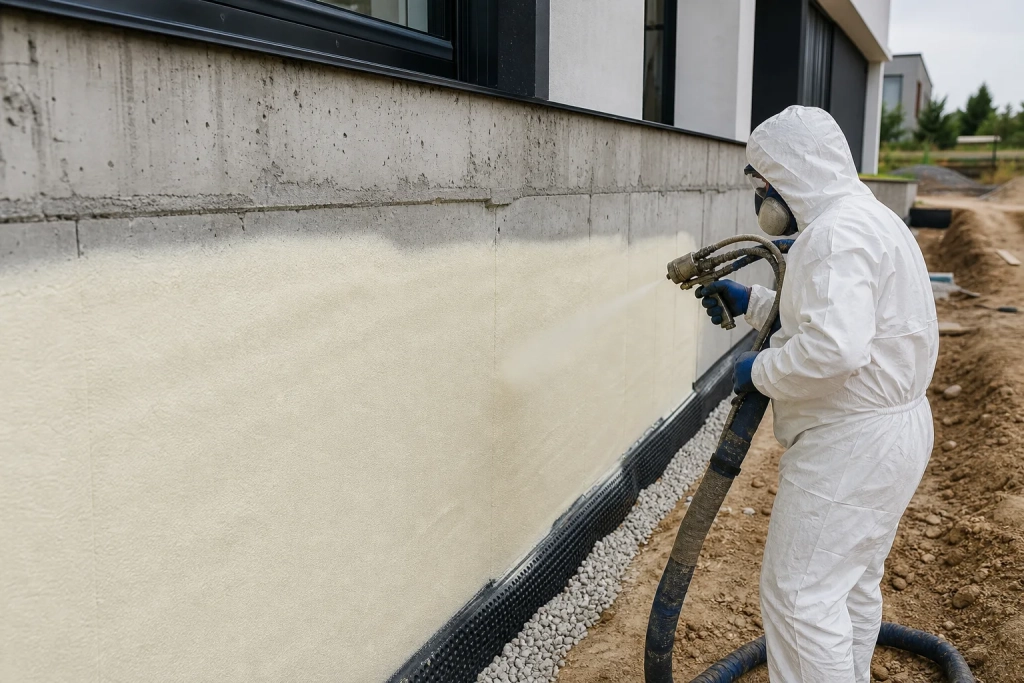
COMPACT AND RIGID
silverFoam CC35 HFO
Closed-cell foam for places requiring limited water absorption, greater stiffness and resistance to compression.
- foundations and quilts
- flooring and floors
- flat roofs and planed roofs
- sheet metal and technical objects
COMPARISON AT A GLANCE
The most important differences between foams
This is a preliminary summary. The final system and thickness should result from the design, current product documentation and assessment of site conditions.
| Characteristics | silverFoam Ag40 | silverFoam CC35 HFO |
|---|---|---|
| Structure | Open-cell, lightweight and resilient | Closed-cell, dense and rigid |
| Declared density | 7–10 kg/m³ | 35 kg/m³ |
| Water vapour diffusion resistance μ | ≤ 5 | ≥ 70 |
| Typical conditions | dry, light partitions | places requiring more resistance to moisture and load |
| Most common direction of application | loft, wooden ceilings, skeletal walls | foundations, floors, flat roofs, sheet metal |

WITHOUT ABBREVIATIONS
The product name shall not replace the assessment of the partition
The same building may require both types of foam in different places. The contractor should confirm not only the product, but also the surface preparation, target thickness, application conditions and method of protecting the finished layer.
- check the source and way of moisture
- set thermal and mechanical requirements
- confirm compatibility of all layers
- receive isolation before covering it up
FROM BUILDING TO THE PRODUCT
Selection of PUR foam in four steps
A reliable recommendation is based on data on the bulkhead, not just on the meter.
01
Spot recognition
Specify the structure, surface, access and existing layers.
02
Assessment of conditions
Check humidity, ventilation, temperature and load.
03
System selection
Indicate the product, thickness and method of preparing the substrate.
04
Application and receipt
Control spray conditions, continuity, details and documentation.
PRODUCT QUESTIONS
FAQ: PUR foams silverFoam
FAQ
01
Are open-cell and closed-cell foam interchangeable?
No. They differ in structure, density, diffusion resistance and mechanical properties, therefore they correspond to different operating conditions of the building element.
02
Which foam to choose for the attic?
Open-cell foam is often considered for lightweight, dry wooden structures. However, the final choice depends on the design, layer arrangement, ventilation and humidity conditions.
03
Which foam to choose for foundation or floor?
In places requiring limited water absorption and greater mechanical strength, a closed-cell system is most often considered. The substrate and layer protection must correspond to the design.
04
Is the lambda factor enough to choose foam?
No. You also need to take into account the thickness, continuity of the layer, moisture, diffusion, loads, application conditions and the compatibility of the entire building element system.
05
Who should confirm the product and thickness?
The selection should result from the design or technical assessment and current product documentation. The scope of implementation must be confirmed before spraying.
SELECT A SYSTEM FOR INVESTMENT
Show silverFoam installer partition
Submit location, photos, dimensions and information about existing layers. On this basis, you can prepare the appropriate selection direction and quotation scope.