


OVERVIEW AND CONDITIONS
Is PUR foam the right solution here?
In a frame wall, each post, wire and window opening is a detail that requires careful execution. Spraying allows you to fill the structure area before closing it with cladding.
Good project begins with an assessment of the structure and conditions, not just the square footage. The product, thickness and method of protection of the layer should be described before work begins.
KEY DECISIONS
What do you need to confirm?
01
Separation state
Substrate, existing layers, humidity and places to be repaired.
02
System selection
Type of foam and thickness resulting from the design and expected effect.
03
Layer protection
The method of protecting foam and reception from the next stage of construction.
BENEFITS OF WELL-DESIGNED SPRAY INSULATION
What can be achieved in the correct execution?
The effect depends on the complete building element system, material parameters, surface preparation and application quality.
01
Accurate completion of fields between construction poles
Continuity must also be checked on connections to adjacent bulkheads.
02
Continuity with hoses, wires and irregular recesses
Corners, transitions, installations and restricted access areas require the most attention.
03
Restriction of waste from cutting material
The correct effect depends on the product, the thickness and the conditions of the application.
04
Possibility to take account of thermal and acoustic requirements
Confirm the scope of work and the final inspection procedure in the quotation before spraying begins.
PLACE OF APPLICATION
Where is this solution being considered?
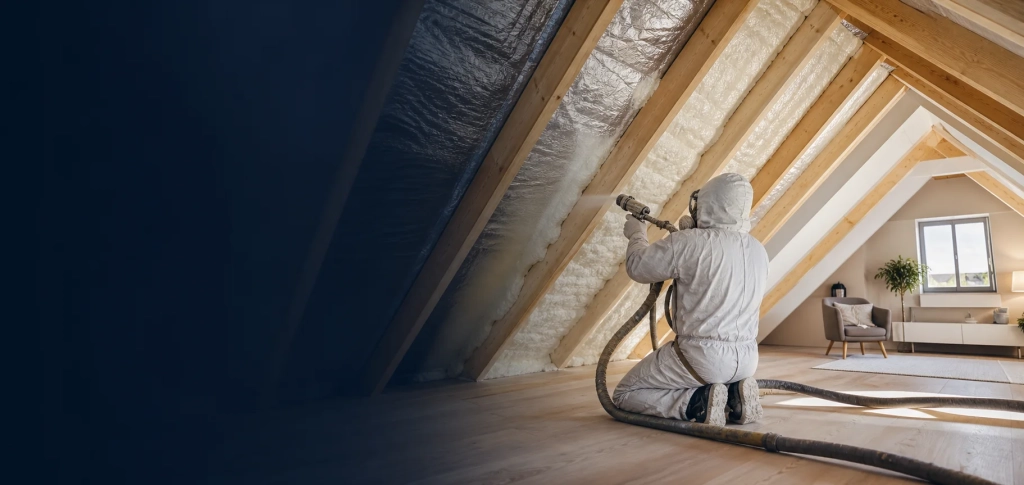
The scope should be described by a specific plane and its layers. The same name of a room may mean a completely different structure and working conditions.
- wooden and steel skeletal walls
- slats and zones at the overhanging
- technical and acoustic walls
- irregular recesses in a modernized building

PRODUCT SELECTION
What kind of foam to choose?
Open-cell foam is most often considered for light, dry walls. However, the arrangement of the vapor barrier, sheathing and façade must result from the design of the entire building element.
Border condition: Insulation should not be covered until continuity has been verified and installations and service locations documented.
STANDARD OF IMPLEMENTATION
From recognition to isolation reception
Each stage reduces a different risk. The layer should not be covered until the agreed details have been checked.
01
Recognition
Construction, humidity, access, installations, existing layers and expected effect.
02
Preparation
Stable, clean and properly dry substrate and environmental protection.
03
Application
Controlled spray parameters, layer work and current continuity control.
04
Over.
Check details, agreed thickness and documentation before further work.

IMPLEMENTING RISK
What's not to miss?
The most common problems result from rushing the preparation or covering the insulation without inspecting it. Discuss these points with the installer.
- covering installations requiring a later service
- Field overflow and slight hull deformation
- no wood moisture control
- omitting continuity on the frame and laying
EVALUATION PREPARATION
What should I give the contractor before the first conversation?
A few specific pieces of information are enough to distinguish a simple project from an object that requires an inspection or additional documentation.
01
Location and time limit
Locality, stage of construction and planned date of construction and insulation cover.
02
Photos of the whole surface
View of partitions, substrates, difficult details, installations and places with limited access.
03
Actual metres
Surface area of the planes intended for spraying, not just the usable surface.
04
Design and Layers
Separation section, type of structure, existing insulation and expected effect.
QUESTIONS BEFORE EXCLUSION
The most common questions: insulation of walls
FAQ
01
Is PUR foam suitable for this use?
Open-cell foam is most often considered for light, dry walls. However, the arrangement of the vapor barrier, sheathing and façade must result from the design of the entire building element. The final decision should be confirmed based on the design, substrate condition and documentation of the specific system.
02
What do you need to check before you spray?
The most important are: humidity of the structure, sequence of layers, installation process and method of closing the wall. The contractor should also confirm the temperature, access and scope of protection of elements that will not be covered with foam.
03
What does PUR foam replace in this bulkhead?
Insulation should not be covered until continuity has been verified and installations and service locations documented.
04
What to send to the preliminary valuation?
Provide the city, approximate spray application area, building type and planned date. Include photos of the entire building element, details, installations and existing layers.
05
What is the final price?
From the surface and thickness of the layer, type of system, geometry, condition of the substrate, access, number of protections, required foam protection and organisation of work on the facility.
QUOTE FOR A SPECIFIC BUILDING ELEMENT
Show contractors real investment conditions.
Send photos, location and square footage. The silverFoam contractor will verify the selection of the system, preparation of the substrate and the scope needed for the offer.