


COMPARISON WITHOUT SIMPLIFICATION
Both products isolate, but work differently
Open-cell foam is not a weaker version of closed-cell foam, and closed-cell foam is not automatically better. Each corresponds to the other requirements of the bulkhead.
silverFoam Ag40 is light, flexible and has low diffusion resistance. silverFoam CC35 HFO is compact, stiff and has a high closed cell content. The choice depends on moisture, loads and the arrangement of all layers.
FIRST CONDITIONS
Four decision-making questions
01
Is the bulkhead dry?
Establish possible contact with water, soil and water vapour.
02
Is the design light?
Check the permissible load and operation of the components.
03
Will the layer be squeezed?
The seat requires different parameters than the slanting.
04
How will she be shielded?
Include fire, UV, damage, and subsequent layers.
DECISION TABLE
silverFoam Ag40 and silverFoam CC35 HFO – a point-by-point comparison
The declared values shall be confirmed each time in the current product documentation.
| Characteristics | silverFoam Ag40 | silverFoam CC35 HFO |
|---|---|---|
| Cell type | open | closed – at least 90% |
| Appearance density | 7–10 kg/m³ | 35 kg/m³ |
| Type of layer | light and elastic | compact and rigid |
| Water vapour diffusion resistance μ | ≤ 5 | ≥ 70 |
| Compression strength | is not the main criterion of use | ≥ 150 kPa |
| Short-term saturation | ≤ 11 kg/m² at partial immersion | ≤ 0,2 kg/m² |
| Typical places | loft, wooden ceilings, skeletal walls | foundations, floors, flat roofs, sheet metal |
| What to confirm | Para-isolate, ventilation and water protection | ground, UV, fire and mechanical protection |
Two Leaders
Select Product Card
If you already know the conditions of the partition, go to the parameters and rules of the application of the appropriate system.
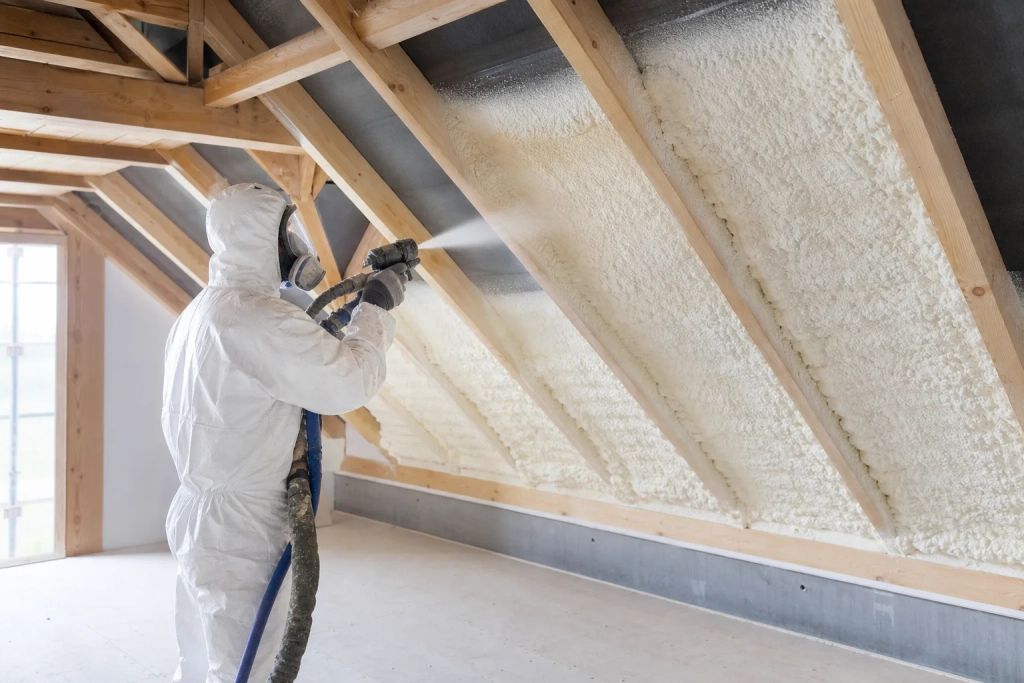
DRY, LIGHTWEIGHT BUILDING ELEMENT
Consider silverFoam Ag40
Direction for attics, wooden ceilings and frame walls when low weight, elasticity and low diffusion resistance are important.
- the structure is not exposed to direct contact with water
- The para-insulated and ventilation system is designed
- not required to withstand the compressive layer
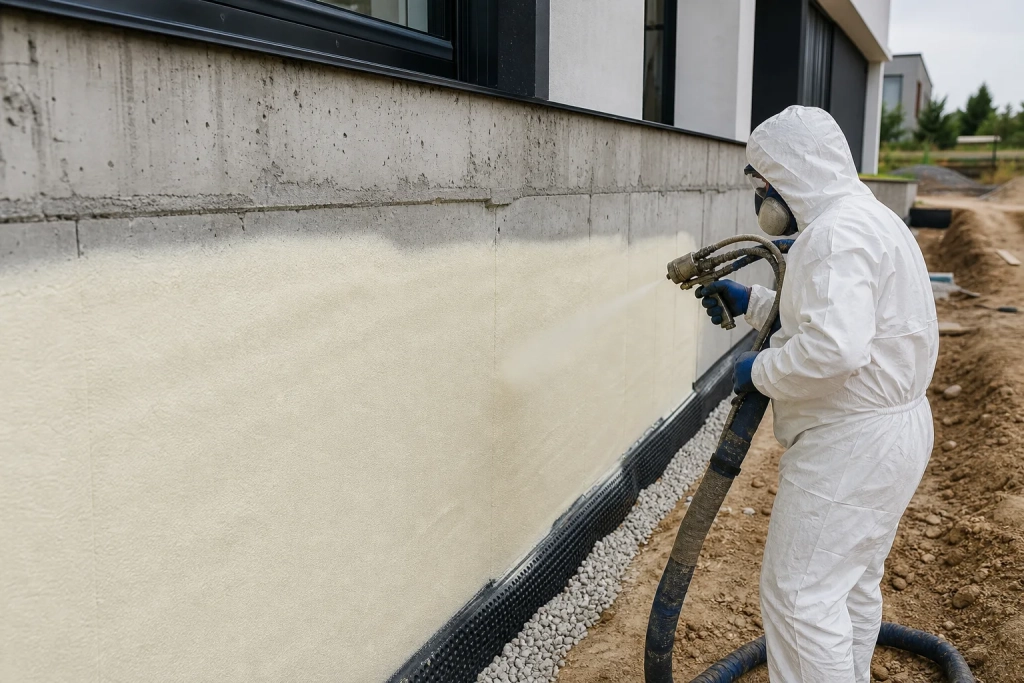
MOISTURE OR LOADS
Consider silverFoam CC35 HFO
Direction for foundations, floors, roofs and sheet metal when the project requires a compact layer, low water absorption and greater stiffness.
- the substrate is dry, load-bearing and prepared
- planned protection from UV and damage
- The hydro-isolate system and shielding layers are separated
A Quick Choice by Place
The most common direction is not an automatic specification
The following tips help start the conversation. The contractor or designer still needs to assess the actual conditions.
01
Wooden attic
The most common silverFoam Ag40; confirm roof tightness, paro insulation and ventilation.
02
The foundation and the quilt
The most common silverFoam CC35 HFO; confirm hydro insulation, substrate humidity and mechanical protection.
03
Wooden ceiling
The most common silverFoam Ag40; specify thermal, acoustic and layering requirements.
04
Seat
The most common silverFoam CC35 HFO; check the loads, thickness and subsequent layers of the floor.
05
Roof or panel of the hall
Often silverFoam CC35 HFO; assess adhesion, condensation, dilation, UV and fire protection.
06
skeletal wall
Often silverFoam Ag40; confirm septum physics, air tightness, and shield layers.
BEFORE THE CONTRACT
How do we get to the right specifications?
Each step reduces the risk of using the correct product in the wrong place.
01
Collect Data
Photos, dimensions, design, existing layers and use.
02
Recognize Humidity
Water sources, ventilation, dew point and possibility of drying the partition.
03
Confirm Product
Full system name, up-to-date documents and compliance with the application.
04
Determination of thickness
The value resulting from the calculation and not the default number for each building.
05
Save Receive
Continuity, detail, thickness control and photos before cover.
QUESTIONS BEFORE THE SELECTION
Open-cell foam or closed-cell foam
FAQ
01
Which foam has better thermal insulation?
You should not choose a product based solely on a single parameter. The effect of the building element is determined by the declared lambda, designed thickness, layer continuity, details and application quality.
02
Does closed-cell foam always offer better protection from moisture?
It has a higher diffusion resistance and lower water absorption than open-cell foam, but it does not remove the source of moisture and does not replace complete waterproofing or ventilation.
03
Can open-cell foam be used in a bathroom?
The purpose of the room alone is not enough to make a decision. You need to analyze the layer arrangement, vapor tightness, ventilation and the risk of contact of the insulation with water.
04
Does higher density always mean better product?
No. Higher density is associated with different structure and mechanical properties, but also higher mass and different diffusion behavior. The product must correspond to the function of the building element.
05
How do you compare two contractors' offers?
Check the full product name, thickness, preparatory work, protective measures, details, application conditions, acceptance procedure and documentation. Prices can only be compared meaningfully when the scope is the same.
Do you need confirmation?
Product selection start by evaluating the partition
Send photos and basic investment data to a contractor operating in your region. You will receive a selection guide based on real conditions.